
Bus Travel: A Simple Step Toward a Smaller CO₂ Footprint
Last updated: 17.11.2025
For modern companies, climate issues aren’t optional — they’re inevitable. Customers, investors, and employees increasingly expect businesses to act responsibly. With the EU’s Green Deal and regulatory frameworks (like CSRD) demanding transparency around environmental impacts, businesses must do more than talk — they must measure and reduce their carbon footprints. Transportation is one of the most practical areas to start.
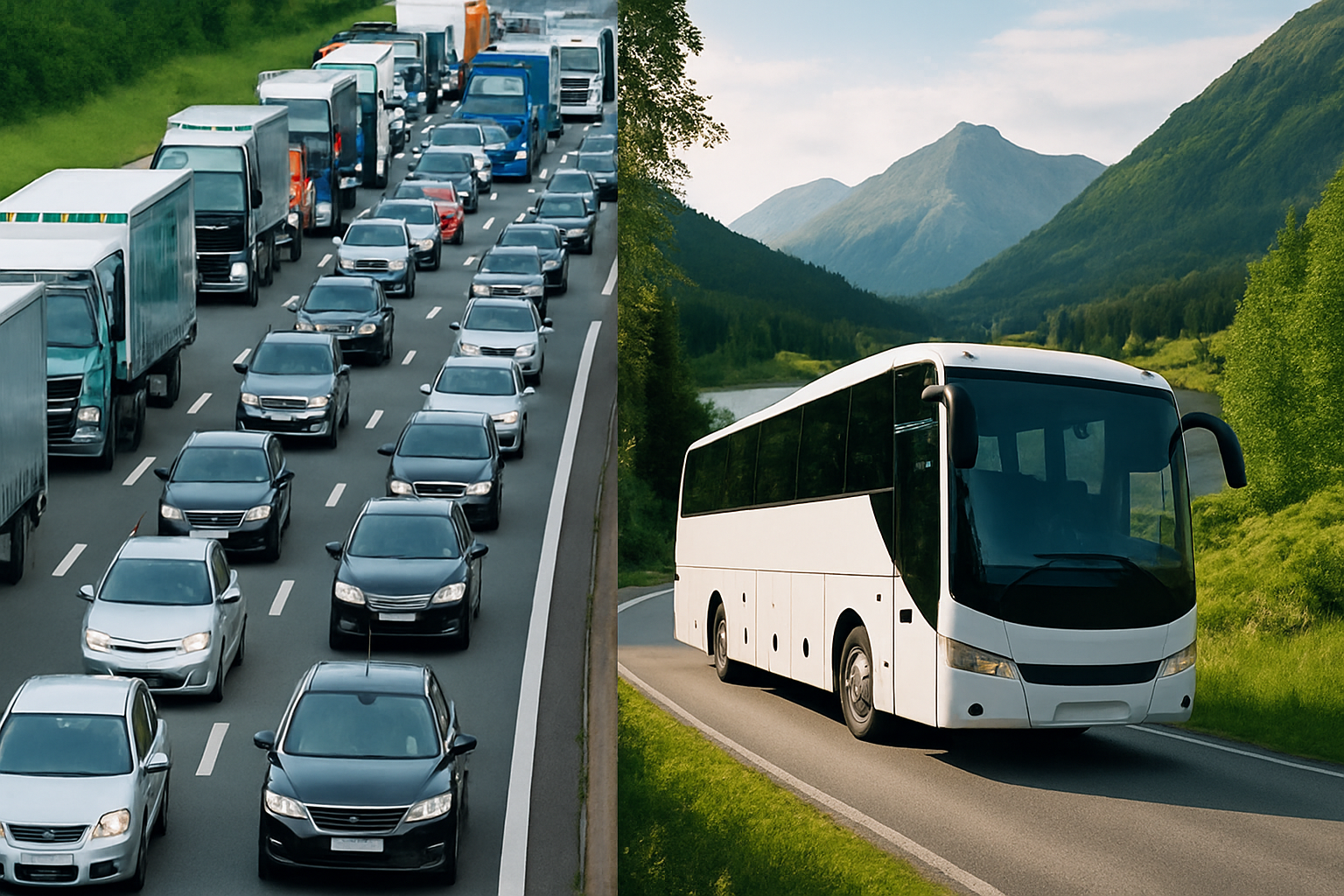
Personal car CO₂ emissions vary widely, typically falling between 57 and 322 g CO₂ equivalent per passenger-kilometer, depending on vehicle type, fuel, and occupancy. In contrast, buses — when operated near average capacity — typically emit 22 to 92 g CO₂ equivalent per passenger-kilometer. That means a well-filled bus can cut emissions dramatically compared to multiple cars. It also reduces traffic load and logistical burden.
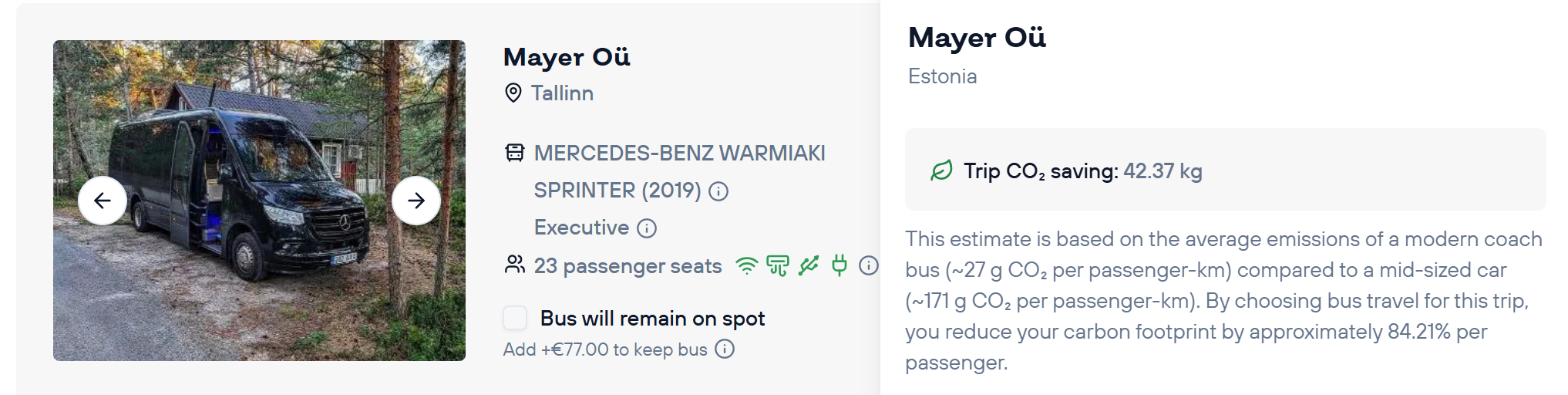
In the Mobifer system, every booking shows exactly how much CO₂ you save compared to driving the same route with cars — making your environmental impact visible before the trip even begins.
For example, Mobifer estimates that a 23-seat Mercedes-Benz Sprinter (2019) operated by Mayer OÜ can save around 42 kg of CO₂ per trip. Based on average emission comparisons, this means that each traveler reduces their carbon footprint by approximately 84 % compared to driving individually.
“Sustainability” is no longer a luxury — it’s a business imperative. Studies show that many consumers choose brands based on environmental awareness. Similarly, companies that act sustainably attract better talent, especially among younger generations.
Beyond carbon reduction, traveling by bus offers tangible business advantages:
Cost savings — lower fuel consumption, reduced parking fees, and less coordination overhead.
Employee comfort and productivity — passengers can relax, network, or even work rather than drive.
Reduced traffic congestion — fewer cars on the road means smoother travel overall.
Transportation is a major contributor to global CO₂ emissions, and road transport in Europe accounts for a significant share of greenhouse gas emissions. In Estonia, road vehicles made up around 17 % of net emissions in 2020. When more companies adopt bus travel for business trips, the impact scales beyond individual firms to the entire sector.
Sustainability doesn’t require radical change overnight — it begins with simple choices. Opting for a bus might seem like a small step, but when many organizations do the same, it becomes a powerful movement with real climate impact.
Next time you plan a team meeting, corporate event, or conference trip — don’t relegate transport to an afterthought. A bus journey doesn’t just reduce costs and emissions — it sends a strong message: your company walks its talk.
Book your next company trip with Mobifer and make sustainability part of your strategy, not just a buzzword.